
Now Reading: Thailand Decides: Reformists vs. Establishment in High-Stakes Vote
-
01
Thailand Decides: Reformists vs. Establishment in High-Stakes Vote

Thailand Decides 2026: A Critical Turning Point or a Return to the Cycle? Three-Way Battle Amid Economic Crisis and Border Tensions
BANGKOK, February 7, 2026 – On Sunday, February 8, over 52 million eligible Thai voters will head to the polls to decide the fate of the 500-seat House of Representatives and cast their votes in a historic referendum on whether to draft a new constitution to replace the military-backed 2017 charter.
This snap election takes place amidst severe political turbulence. Thailand has seen three Prime Ministers in less than three years since the 2023 general election. The political instability is compounded by a sluggish economy that grew only 2% in 2025, a deadly border conflict with Cambodia that has claimed 149 lives, and devastating floods in the South. Furthermore, the specter of “grey capital” and call-center gangs infiltrating financial institutions and the Royal Thai Police looms large. Thus, this election is not merely a selection of leadership, but a litmus test of whether Thailand can break its vicious cycle of coups, street protests, and judicial interventions.
In-depth analysis suggests that while the People’s Party holds a clear lead in the polls, the lack of a decisive absolute majority could lead to complex coalition negotiations, potentially blocked by the “establishment”—a network comprising the palace, the military, and the judiciary. International media view this election as a “high-stakes” event that could prolong political uncertainty. This article analyzes the background, key parties, policies, polls, coalition possibilities, and international perspectives to provide an overview of an election that could define Thailand’s direction for years to come.
Political Background: From Move Forward’s Victory to Peak Fragility
Looking back to the 2023 election, the Move Forward Party, led by Pita Limjaroenrat, won a landslide victory driven by a younger generation weary of the old system. However, they were blocked from forming a government by the junta-appointed Senate. Eventually, Pheu Thai, a former ally, switched sides to form a coalition with conservative parties like Palang Pracharath and Bhumjaithai, led by Srettha Thavisin.
That government, however, proved unsustainable. Srettha was removed by the Constitutional Court in 2024 on ethical grounds. He was succeeded by Paetongtarn Shinawatra, daughter of former PM Thaksin Shinawatra. Her tenure was cut short in 2025 when she was removed from office following a leaked audio conversation with former Cambodian PM Hun Sen, in which she criticized the Thai military—an act branded by opponents as a betrayal of the nation. Consequently, Anutin Charnvirakul of the Bhumjaithai Party ascended as caretaker Prime Minister in September 2025, initially supported by the People’s Party in exchange for pushing constitutional amendments. However, conflicts over this very issue led Anutin to dissolve parliament in December 2025 to avoid a censure debate, triggering an election within 60 days.
Thailand’s political history over the past two decades reflects “high fragility,” marked by two coups, numerous street protests, and judicial interventions that have unseated five prime ministers. The 2017 Constitution, drafted by the military junta, empowers the Senate and independent bodies like the Constitutional Court and the NACC (National Anti-Corruption Commission), which are often criticized for favoring the conservative establishment. This election presents an opportunity for reform, but also risks sparking new conflict if a “Yes” vote in the referendum is thwarted by existing power structures.
Key Parties and Policies: A Clash of Reform, Security, and Populism
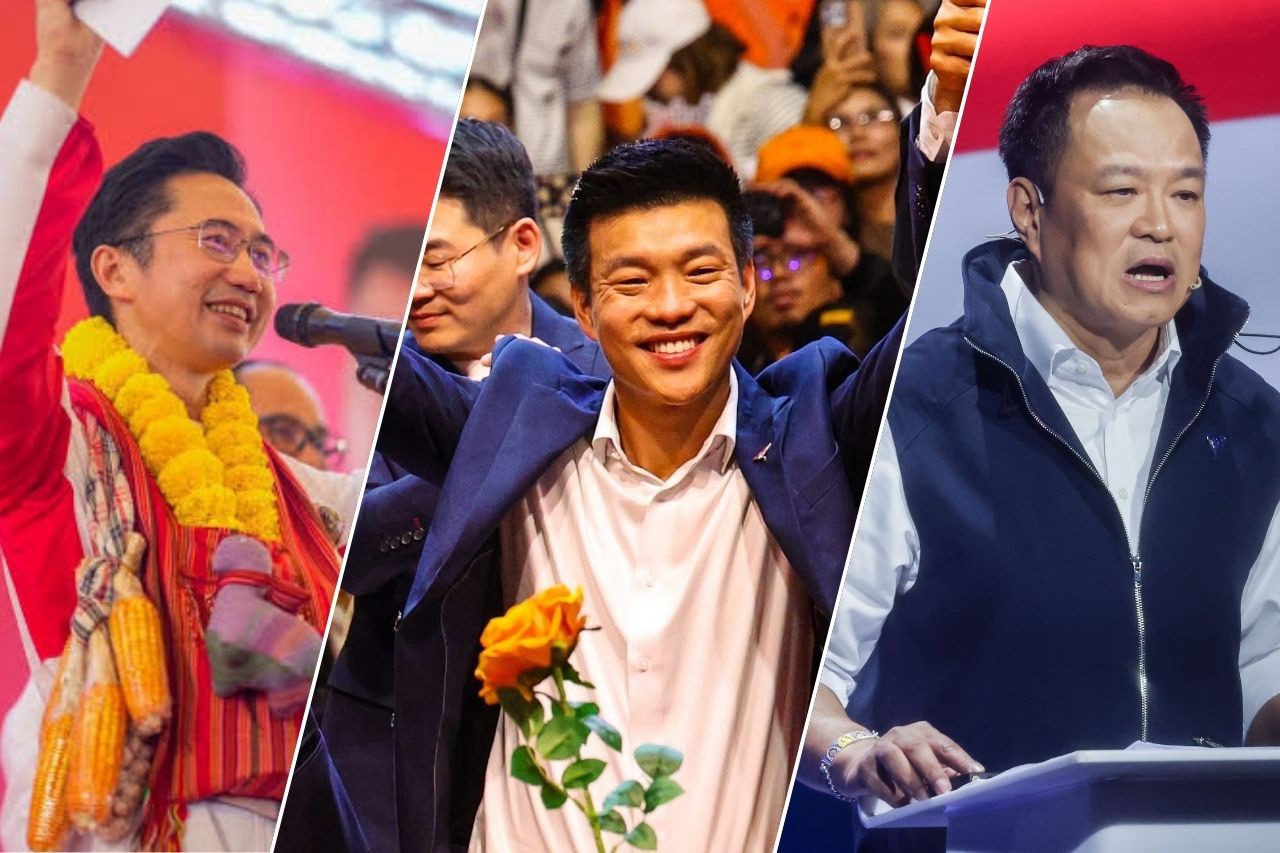
This election is a three-way battle between reformist, conservative, and populist factions. With no single party expected to secure an absolute majority (251 seats), post-election coalition building will be key, all occurring against a backdrop of economic stagnation, high household debt, and corruption linked to grey capital.
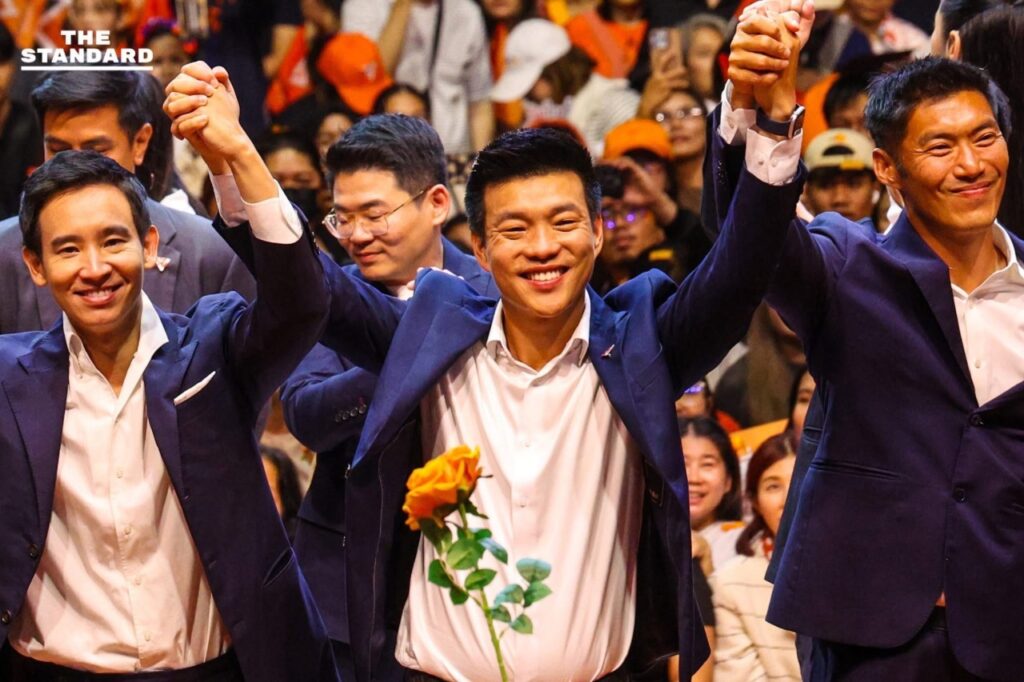
• People’s Party: The successor to the dissolved Move Forward Party, led by Natthaphong Ruengpanyawut. The party aims for structural reform: reducing the military’s role, ending conscription, amending the lèse-majesté law, and curbing the power of independent agencies. Their economic policy includes a 250-billion-baht stimulus plan, SME support, and anti-corruption measures. They campaign for a “Yes” vote in the referendum to draft a “people’s constitution.” While popular among youth and urbanites, they face legal risks from pending ethics cases with the NACC that could lead to another dissolution.
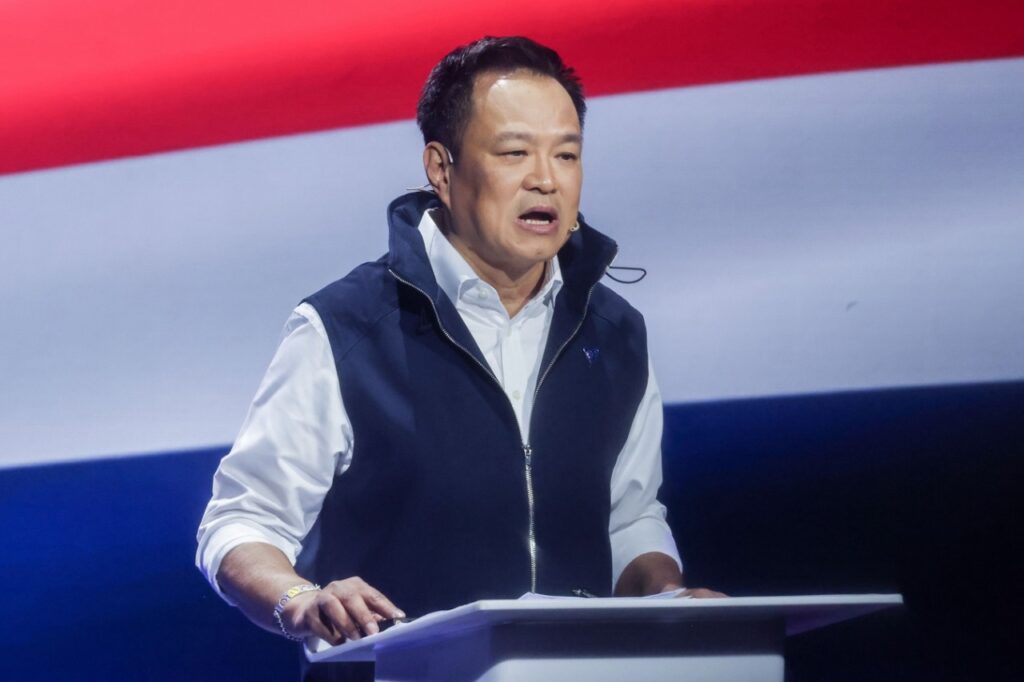
• Bhumjaithai Party: Led by Anutin Charnvirakul, this conservative party maintains close ties with the military and the palace. Campaigning on nationalism, they promise to build a border wall with Cambodia, expand volunteer military forces, and protect sovereignty. Their economic focus is stability, though they face criticism for mishandling southern floods and corruption scandals. Anutin utilizes the advantage of incumbency and the border crisis to rally support but faces pressure from the reformist tide.
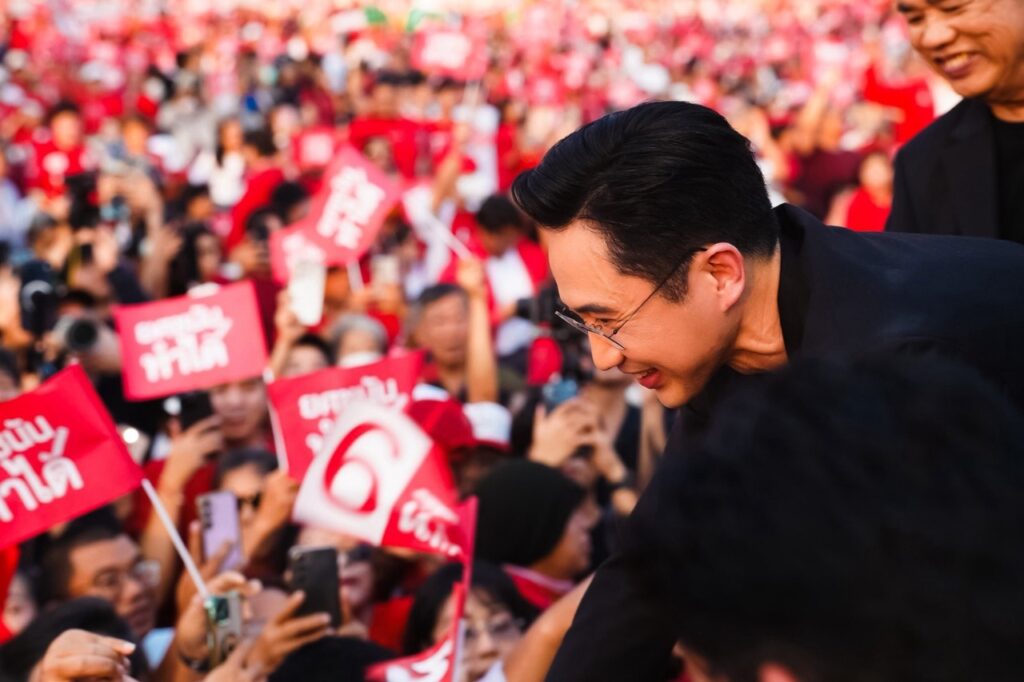
• Pheu Thai Party: The populist party that once dominated the rural vote, now led by Yodchanan Wongsawat (Thaksin’s nephew). They campaign on economic stimulus, such as digital cash handouts, agricultural support, and AI/Data Center development. However, their brand has been severely damaged by Paetongtarn’s removal and Thaksin’s imprisonment, leading to a drop in popularity. The party promotes a “tech-first” approach for recovery but is viewed by many as lacking a clear identity.
Smaller parties like the Democrats and Palang Pracharath could become kingmakers. Overall, major parties focus on short-term economic stimulus, such as co-payment schemes and tax-incentive lotteries, rather than deep structural reforms regarding debt and inequality.
Polls and Popularity: People’s Party Leads, But the Race is Tight
Latest polls from Suan Dusit University (January 2026) show the People’s Party leading at 36%, followed by Pheu Thai at 22.1%, and Bhumjaithai at 18.9%. NIDA Poll indicates People’s Party at 34.2%, Bhumjaithai at 22.6%, and Pheu Thai at 16.2%. regarding Prime Ministerial candidates, Natthaphong leads at 29.1%, followed by Anutin at 22.4%, with Yodchanan trailing.
Surveys indicate voters are most concerned about the economy, followed by border security and corruption. With 14% of voters still undecided, the focus is heavily on policy substance rather than ideology. Experts like Dr. Punchada Sirivunnabood (Mahidol University) and Dr. Termsak Chalermpalanupap (ISEAS) predict a tight race; while the People’s Party may improve on their 2023 seat count (151), forming a government remains the ultimate hurdle.
Government Formation: Coalitions and Risks
If the People’s Party wins the most seats, they may attempt to form a “pro-democracy coalition” with Pheu Thai and smaller parties. However, the betrayal of 2023 (when Pheu Thai switched sides) remains a significant barrier to trust. Conversely, if Bhumjaithai aligns with Pheu Thai and Palang Pracharath (potentially totaling 288 seats), Anutin could return as Prime Minister of a conservative coalition, though this would be criticized for failing to answer the public’s call for change. The People’s Party has explicitly stated they will not support Anutin.
According to the timeline, the Election Commission has until April 9 to certify results. The House will convene to choose a Speaker in April and a Prime Minister in May, with the new government expected by mid-June 2026. However, complaints or judicial interventions could lead to a new political vacuum. If the referendum passes, the drafting of a new constitution will begin but faces potential obstruction from the old guard.
International Perspective: Hope Mixed with Concern
International media view this election as a crucial test for Thai democracy. Al Jazeera questions whether Thailand can escape the “cycle of coups, protests, and judicial intervention.” The BBC warns that “winning an election in Thailand is never enough,” citing the establishment’s blockage in 2023. Reuters highlights the 20-year history of turmoil, noting that reformist parties threaten elite interests.
The Guardian warns that the People’s Party faces ethical cases that could lead to dissolution. CFR and The Diplomat note that the border dispute aids Bhumjaithai by fueling nationalism, potentially hurting reformist momentum. Bloomberg cautions that a fragile coalition could delay economic policies and recovery. Overall, global observers fear Thailand remains trapped in instability, though a People’s Party government could signal deep, genuine reform.
Conclusion: A Path to Reform or Continued Turmoil?
The 2026 election is a definitive test. A victory and successful government formation by the People’s Party would signal a reduction in the military’s political power and judicial overreach. However, if they are blocked by “special means,” it could trigger a new wave of mass protests.
Economically, the new government must address low growth, high debt, and grey capital. Human Rights Watch has warned that Anutin’s caretaker government failed on human rights and reform. Additionally, narcotics and online scams remain major challenges requiring evidence-based policies rather than brute force.
In summary, while there is a high risk of prolonging the cycle of fragile coalition governments, this election also offers a starting point for a new consensus. If all parties respect the results and engage in structural reform, Thailand may finally move toward sustainable democracy. In the eyes of the world, this election will determine whether the country becomes a progressive “laboratory” for the Global South or remains stuck in its old conflicts.
Sources: BBC, IDPC, HRW, The Guardian, AL Jazeera, Reuters and Other


Advertisement